Your Child Isn't Lazy: They Just Don't Have a System Yet
How to stop nagging your child, build healthy habits, and create a daily routine for kids that actually works.

Summer is a wonderful time for children. There are long days spent swimming, riding bikes, visiting grandparents, playing outside with friends, and enjoying the freedom that comes after a busy school year. For many families, summer is exactly what it should be, a chance to slow down and recharge.
But let's be honest. As the new school year gets closer, many parents begin to feel a little anxious. The summer reading list is still sitting on the kitchen table. The math workbook hasn't been opened in days. Screen time has quietly stretched from an hour into an entire afternoon. And suddenly, you find yourself saying the same things over and over again.
If you've ever wondered how to stop nagging your child, you're certainly not alone. It's one of the most common parenting challenges, especially during the transition from summer break to the school year. Many parents worry that their child has become lazy or unmotivated. But what if that's not the real problem? What if your child doesn't need more reminders? What if they simply need a better system?

The Problem Isn't Motivation
Most children don't wake up thinking, "Today I'm going to ignore my parents." Instead, they're doing exactly what children's brains naturally do: they choose the activity that feels most enjoyable in the moment. If a child can choose between reading a chapter and watching funny videos, the choice is obvious. That doesn't mean they're lazy. It means they're human.
Young children are still developing the executive function skills that help adults plan ahead, remember responsibilities, control impulses, and switch from something enjoyable to something more challenging. Independence isn't something children magically wake up with. It's something they practice every day. That's encouraging, because it means parents don't have to rely on constant reminders forever. They can teach children systems that eventually replace those reminders.
Why Constant Reminders Don't Work
Imagine this. Your child is completely absorbed in a game on their tablet. You walk in and say, "Time to read your book." Your child barely looks up. You remind them again. Nothing. Five minutes later, another reminder. Soon both of you feel frustrated. Sound familiar?
The problem isn't that your child didn't hear you. It's that switching attention is difficult, especially after children have become deeply engaged with screens. Instead of waiting until your child is already immersed, successful families make decisions before the day begins. The plan is visible. The expectations are clear. Everyone understands what comes first. This simple shift dramatically reduces arguments.
Today's Plan
Children Thrive on Predictable Routines
Think about brushing teeth. Most children eventually brush their teeth without being reminded every single day. Why? Because it becomes part of their daily routine. The same principle applies to almost everything else: reading, practicing piano, helping with simple home chores, preparing a backpack, taking care of a pet.
These aren't just tasks. They're habits. And habits are much easier to maintain than relying on motivation. That's why one of the best positive parenting strategies isn't reminding children more often. It's creating a daily routine for kids that becomes predictable over time. Children actually feel safer when they know what's expected. Instead of wondering, "What am I supposed to do now?" they begin thinking, "This is what comes next."
A Summer Routine Doesn't Have to Feel Like School
Many parents try to recreate a full school schedule overnight, and children naturally resist. Instead, build a gentle summer routine that slowly transitions into a back-to-school routine.
- Wake up
- Brush teeth
- Eat breakfast
- Read 15 min
- Outdoor play
- Lunch
- Math practice
- Home chore
- Family dinner
- Walk together
- Prep tomorrow
- Bedtime reading
Notice something important? There is still plenty of room for fun. The goal isn't to fill every minute. It's simply to create enough structure that children know what comes next.
Why Systems Beat Reminders
Let's imagine two families.
Family A
Every afternoon sounds like this:
"Did you clean your room?" "Please read your book." "Don't forget your homework." "Have you fed the dog?"
The parent becomes the family's memory.
Family B
The child already knows today's checklist:
Read. Math. Feed the dog. Clean up toys. Then screen time.
The parent encourages, but the system remembers.
Which family experiences fewer arguments? The difference isn't stricter parenting. It's having a system. Children aren't expected to remember everything on their own; the system remembers for them.
Over time, those routines become habits. Eventually the child no longer needs the checklist as often, because the routine has become automatic. That's how responsibility grows: not through louder reminders, but through repetition.

Responsibility Starts Small
Many parents ask, "How do I teach responsibility?" The answer isn't giving children bigger responsibilities. It's helping them succeed with smaller ones, then building from there.
🌿 For Younger Kids
- ✓ Put dirty clothes in the laundry basket
- ✓ Feed the family pet
- ✓ Make the bed
- ✓ Read for fifteen minutes
🎒 For Older Kids
- ✓ Prepare their backpack
- ✓ Manage homework independently
- ✓ Help with family meals
- ✓ Complete age-appropriate chores
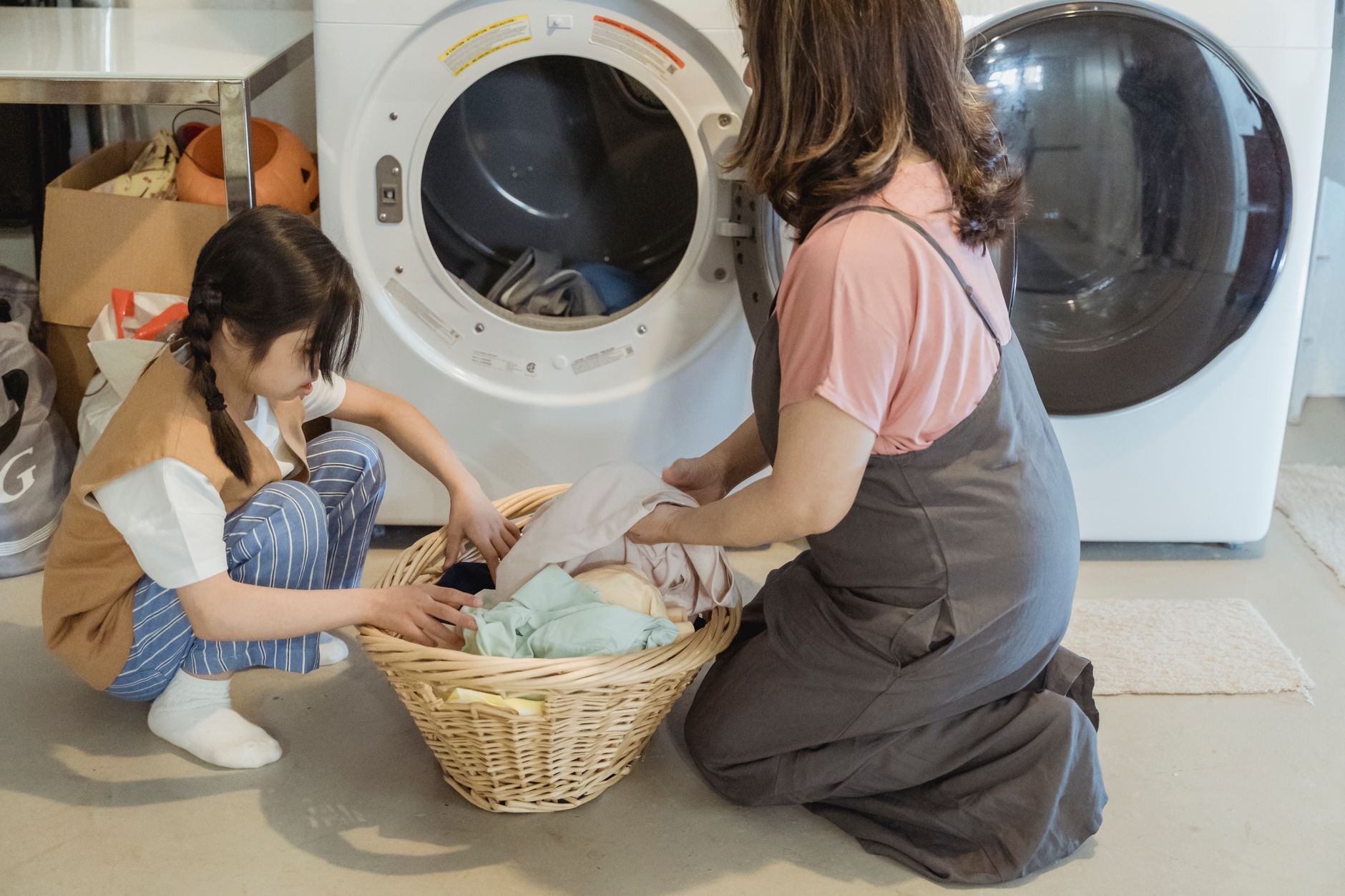
The key is choosing chores for kids by age rather than expecting every child to manage the same responsibilities. A six-year-old and a twelve-year-old develop at very different speeds. When expectations match a child's age, confidence grows naturally.
Stop Being the Family Reminder
Parents often carry an invisible mental checklist: homework, reading, doctor appointments, swimming lessons, piano practice, laundry, groceries, family schedules. It's exhausting. Many working parents describe feeling like the project manager of their household. The challenge isn't just remembering children's responsibilities. It's remembering everyone's.
That's why creating a visible family routine helps everyone, not just children. When expectations live outside your head, you don't have to repeat them all day. Children become more independent. Parents feel less overwhelmed. The whole family experiences less stress.
Three Questions That Can Change Your Parenting
If the answer is always the same, perhaps it shouldn't depend on reminders anymore.
If not, maybe the plan isn't clear enough yet.
Sometimes the smallest questions lead to the biggest changes.
Independence Is Built One Habit at a Time
Every parent dreams of raising children who are kind, responsible, confident, and independent. Those qualities don't appear overnight. They grow through small daily habits: reading a little every day, helping around the house, taking responsibility for simple tasks, and learning that fun comes after responsibilities, not instead of them.
Children don't need perfect parents. They need consistent ones. Parents who stay calm. Parents who create routines. Parents who believe that habits matter more than constant reminders. Over time, those habits become something much bigger. They become character.
Before You Go…
This week, don't try to change your child. Instead, notice how many reminders you give in a single day. Then ask yourself: if our family had a clearer system, how many of those reminders would no longer be necessary?
Whether you use a simple checklist on the refrigerator, a family calendar, or a digital family planner, the goal is the same: help children see what needs to be done instead of hearing the same reminders over and over.
Get MiloMint free →Next in the series: why the most organized families don't rely on memory at all, and how simple routines dramatically reduce daily battles while helping children become more independent.
Photos via Pexels: Andrea Piacquadio, Helena Lopes, Gustavo Fring, Nicola Barts.